
To choose an orthodontist in Grand Blanc, start by making sure the doctor is a trained orthodontic specialist. Then look at how long the doctor has been practicing, what patients say about how they were treated, and whether the orthodontist checks your progress personally at each visit. The office location and hours matter too, because treatment usually means regular visits for a year or two. A free consultation is your chance to see whether the doctor explains your options clearly, answers your questions, and gives you time to decide. At Wendling Orthodontics, we’ve treated thousands of patients with braces and clear aligner therapy since 1998. Our Grand Blanc office on Reid Road serves families from Grand Blanc and nearby Fenton.
Is the Doctor a Trained Orthodontic Specialist?
Make sure the doctor who will treat you is an orthodontist. An orthodontist is a dentist who went on to complete two to three more years of specialty training in orthodontics after four years of dental school.
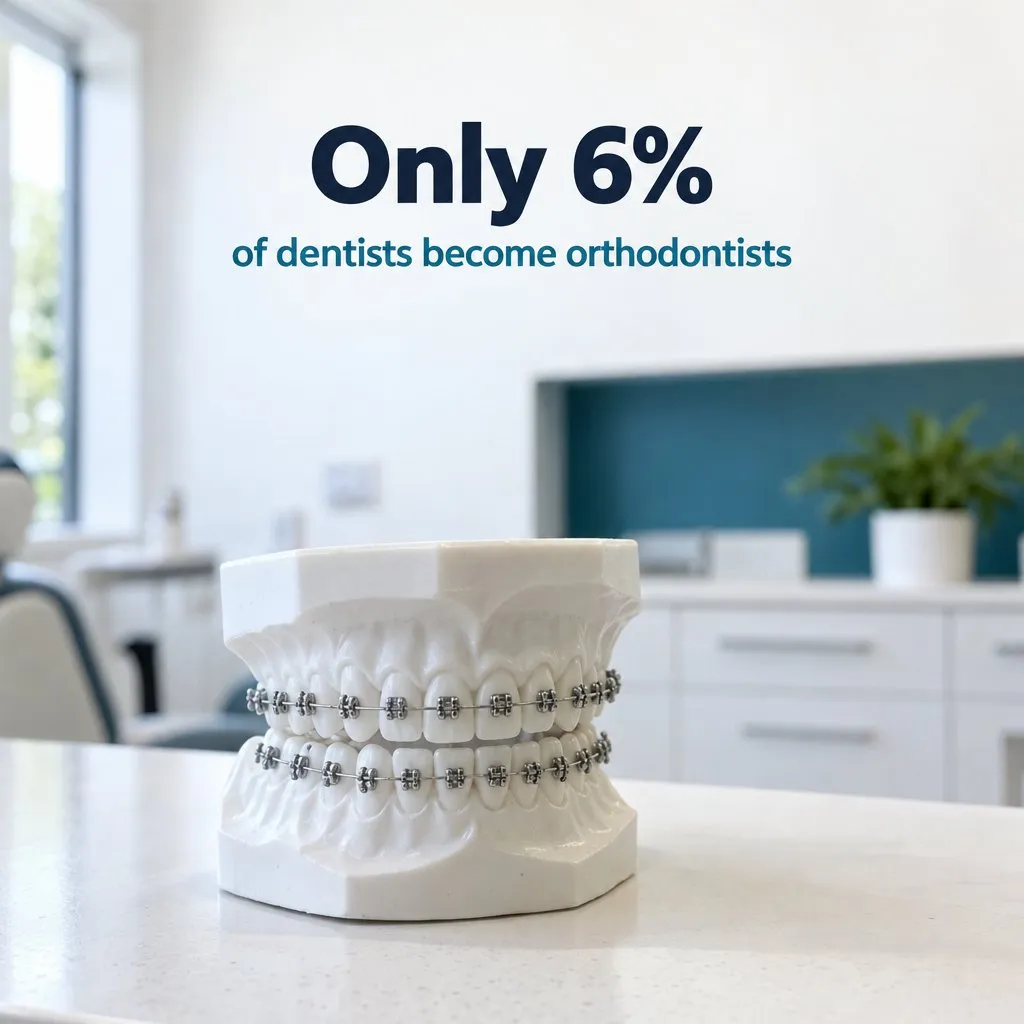
Most dentists do not have this extra training. According to the American Association of Orthodontists (AAO), only 6% of dentists go on to become orthodontists. Some dentists who aren’t orthodontists also offer braces or clear aligners, so ask each office whether the doctor who will plan your treatment is an orthodontist.
You can check a doctor’s training before you book a visit and again at the consultation:
- Search the AAO’s Find an Orthodontist tool. To join the AAO as a practicing orthodontist, a doctor must have completed an accredited orthodontic specialty program. The AAO’s Find an Orthodontist locator lets you search for member orthodontists in your area, so you can see whether the doctor you’re considering is listed. If your doctor isn’t listed, ask about their training when you call or visit.
- Read the doctor bios on the practice’s website. An orthodontist’s bio should list two programs: dental school and the orthodontic program the doctor finished after it.
- Ask the doctor directly. At your consultation, ask where the doctor completed their orthodontic specialty training. Any orthodontist should be able to answer that right away.
Some orthodontists also earn board certification from the American Board of Orthodontics, which involves passing written and clinical exams. Board certification is voluntary, so think of it as a plus when you compare doctors, not a requirement.
How Do I Know If an Orthodontist Is Good?
A good orthodontist usually has years of experience, has treated a large number of patients, gets reviews that describe kind care and clear explanations, and checks your progress personally at your visits.
Experience is the first thing to look at. Ask how long the orthodontist has been practicing and about how many patients they have treated. An orthodontist who has treated many patients over many years is more likely to have seen a case like yours before. There’s no set number that counts as enough, so compare the answers you get from each office.
Reviews are most helpful for what they say about how people were treated. Look for comments about whether the doctor explained things clearly, whether the staff were friendly, and whether kids and nervous patients felt comfortable. Those details tell you more about what your visits will be like than a star rating does.
It’s also a good idea to ask whether the orthodontist will check your teeth personally at each visit. The orthodontist who planned your treatment knows how your teeth are expected to move, so they can see at each appointment whether treatment is going as planned.
What Treatment Options Does the Orthodontist Offer?
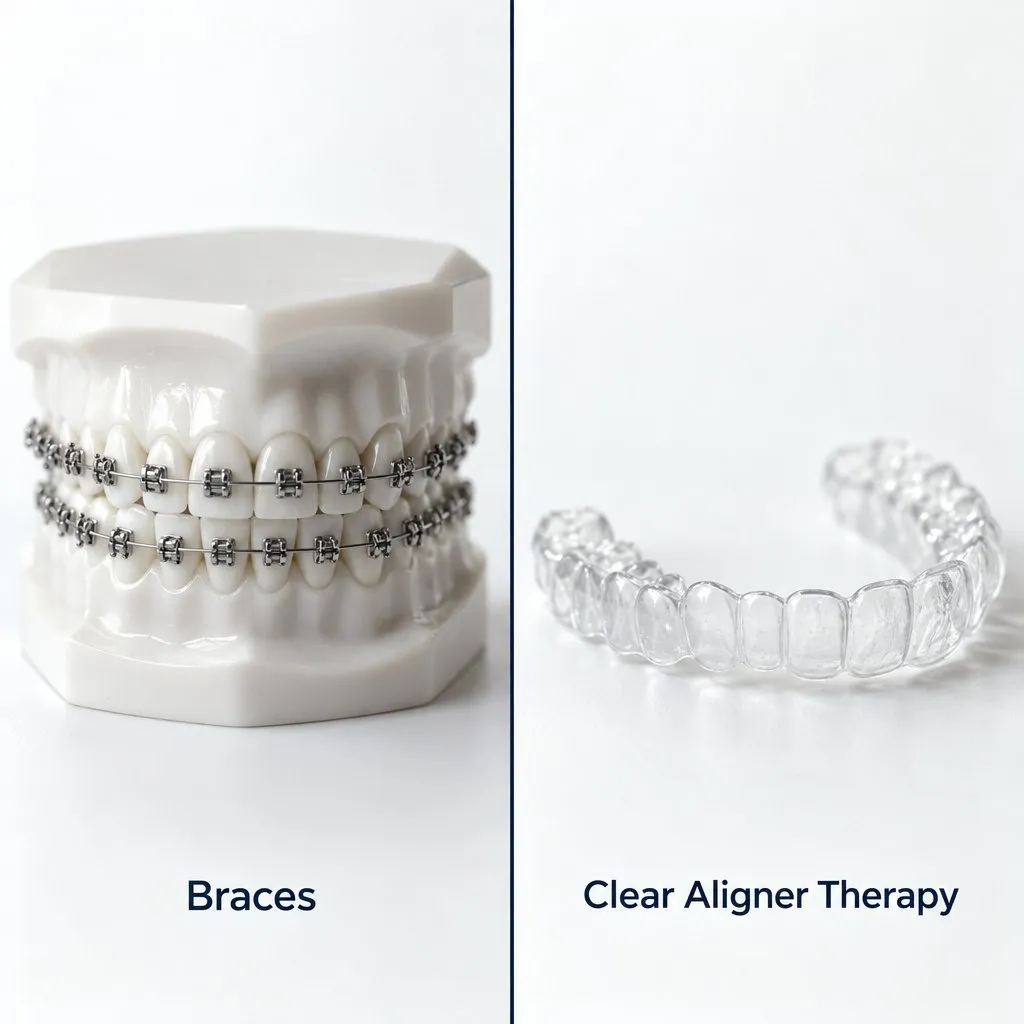
Ask whether the office offers both braces and clear aligners. An office that offers both can recommend whichever one fits your case best. A good orthodontist will also explain why they’re recommending one over the other, so you understand the choice. If you’d like to learn how each one works first, you can read our braces and Invisalign® pages.
How Often Will You Have to Go to Appointments?
How often you go depends on the treatment and the office, so ask each office you visit. The answer matters because treatment usually lasts a year or two, and you’ll make the trip to the office many times. An office close to home, school, or work makes those visits easier to fit into your week. Before you choose, check the office hours against your family’s schedule.
At our practice, braces visits are usually every 8 weeks, and clear aligner visits are usually every 12 weeks.
| Treatment | How often you visit | Typical treatment length |
|---|---|---|
| Braces | Every 8 weeks | 12 to 24 months (or more, depending on complexity) |
| Clear aligner therapy | Every 12 weeks | 12 to 20 months (or more, depending on complexity) |
Our Grand Blanc office is open Monday through Thursday from 8:00am to 5:00pm, and from 7:30am to 1:00pm on select Fridays. The office is closed on Saturday and Sunday.
What Should You Look For When You Visit an Office?
When you visit an office, look at how the orthodontist plans your treatment and how the team treats your family. For planning, ask whether the office uses a digital scanner. A scanner makes a 3D map of your teeth, so you don’t have to bite into a tray of putty to make a mold. It also gives the orthodontist precise measurements to plan your treatment.
Then notice how the team talks with your child and whether there’s a comfortable place for you to wait. Your child will be coming back many times during treatment, and those visits usually go more smoothly in an office where they feel at ease.
What Matters Most When Choosing an Orthodontist?
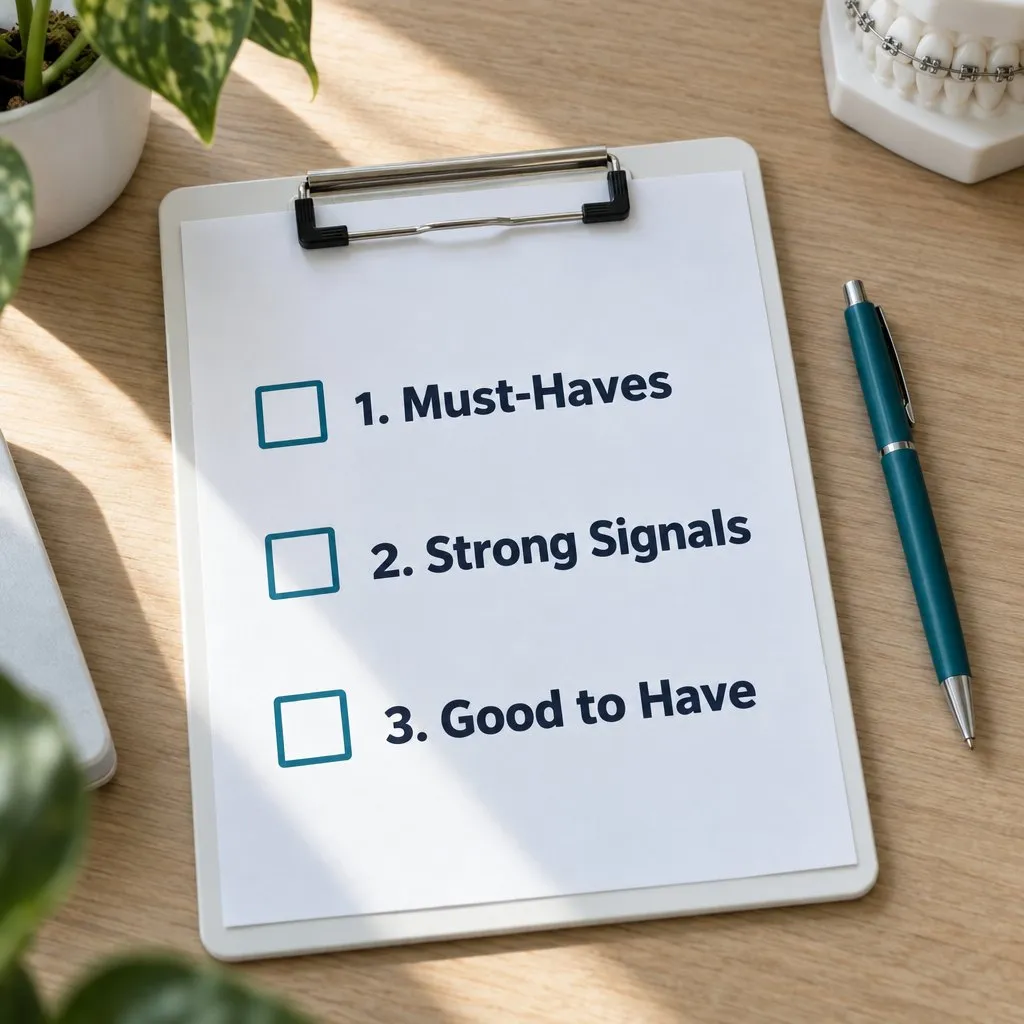
The doctor’s training, experience, and way of explaining your options matter most, because the doctor is the person planning and guiding your treatment. Put the checks in this order when you compare offices:
- Must-haves: The doctor is a trained orthodontist, explains your options clearly, and gives you time to decide without pressure. If an office misses any of these, keep looking.
- Strong signals: Years of experience, a large number of patients treated, reviews that describe kind care, and an orthodontist who checks your progress personally at each visit. These tell you how the doctor works with patients over a long treatment, so use them to compare the offices that meet every must-have.
- Good to have: A convenient location and hours, digital scans, a comfortable place to wait, and board certification. These make treatment easier or add confidence, and they can help you decide between two offices that are otherwise a close match.
What Red Flags Should You Look Out For?
Be cautious if an office rushes you or leaves you without clear answers. Watch for these signs:
- Pressure to start treatment or sign paperwork the same day. Orthodontic treatment usually lasts many months, so you should have time to think it over at home before you commit.
- A recommendation with no explanation. The doctor should tell you what they see in your teeth or bite and why they’re recommending a certain treatment.
- Early treatment presented as something every child needs. Early treatment is orthodontic treatment for a young child whose jaw is still growing. Not every child needs early treatment. A careful orthodontist decides case by case and recommends it only when it can fix a specific problem, such as an upper jaw that’s too narrow.
- Questions that get a rushed answer or no answer. You’ll have questions throughout treatment, so look for a team that takes time to answer them from the first visit.
What Questions Should You Ask an Orthodontist at Your Consultation?
A free consultation is the best time to ask questions, because you get to meet the doctor and see the office before you commit to anything. It’s normal to visit more than one office for a consultation before you choose. Meeting more than one doctor lets you compare how each one explains your options and how each team treats your family.
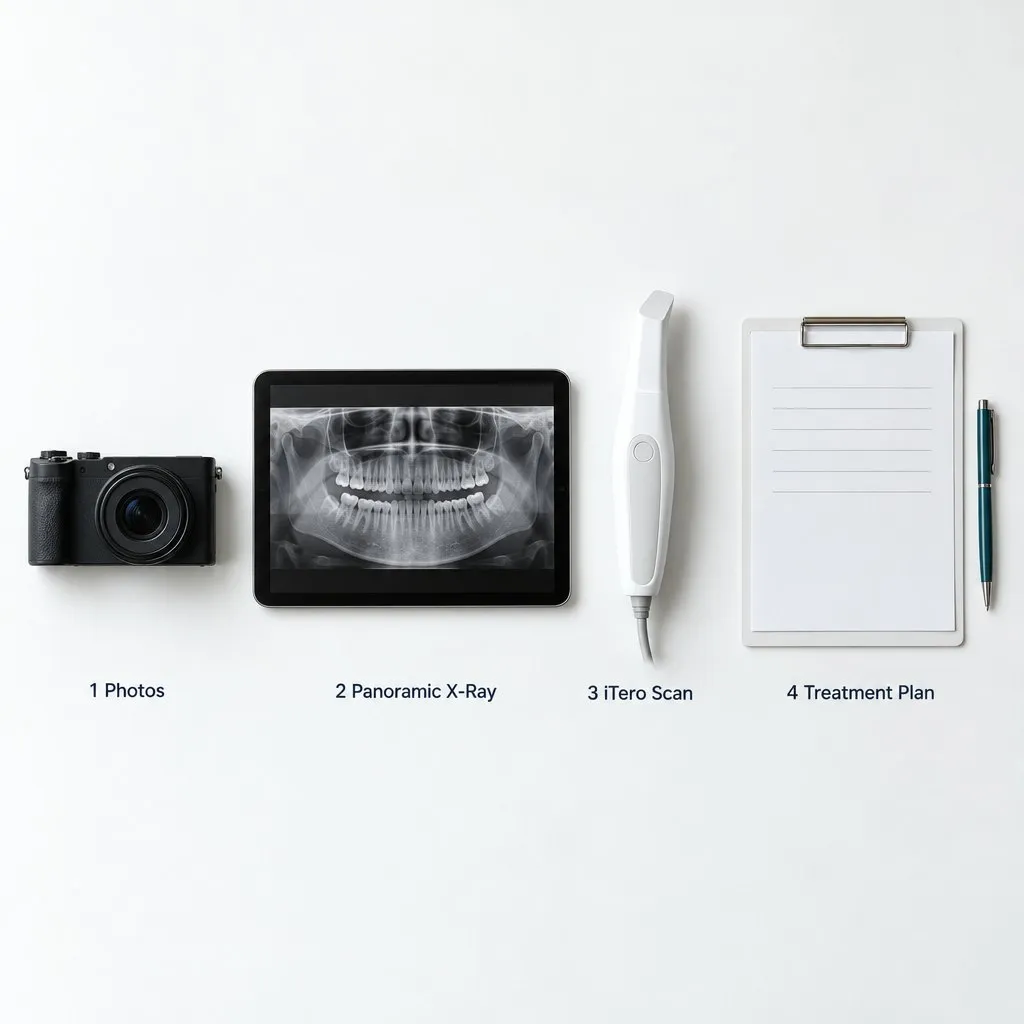
At our free consultation, we take photos of your smile and face, a digital panoramic x-ray, and often a 3D iTero scan. Then Dr. Wendling, Dr. Perry, or Dr. Nolan does a thorough exam, talks with you about braces and clear aligner options, and puts together a treatment plan based on what they find. We also review your investment during the visit.
Bring these questions with you:
- Are you an orthodontist, and where did you do your orthodontic training?
- Will an orthodontist check my progress at each appointment?
- What do you see in my teeth or my child’s teeth, and what would treatment correct?
- Do you recommend braces or clear aligners for me, and why?
- How long do you expect treatment to take?
- How often will we need to come in, and what are your office hours?
- What will we need to do at home during treatment?
- What happens if a bracket comes loose or an aligner gets lost?
- What happens after treatment ends, and how do retainers work?
- For a child: does my child need treatment now, or should we wait and watch?
When Should Your Child First See an Orthodontist?
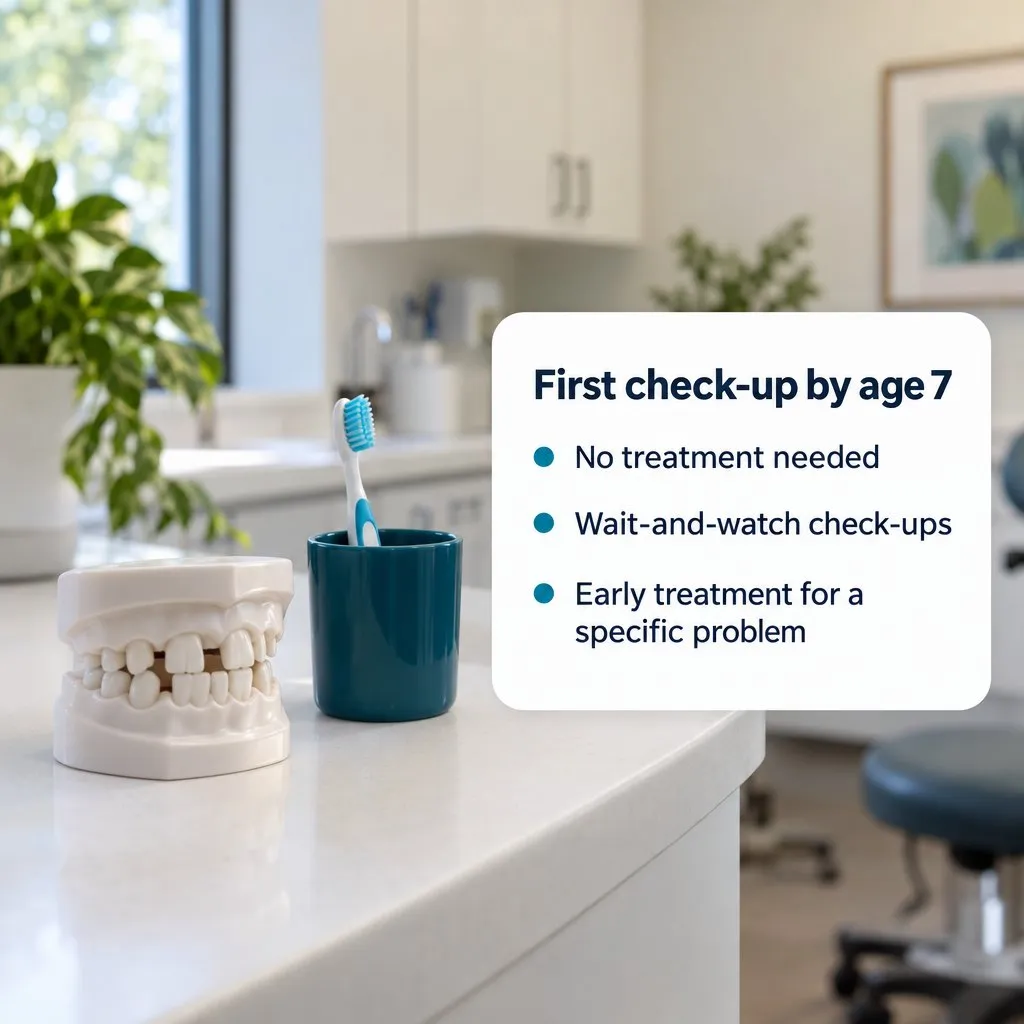
The AAO recommends that children have their first orthodontic check-up by age 7. At that age, the front permanent teeth have usually started to come in and the jaw is still growing, so an orthodontist can check how both are developing. That first visit is an evaluation, and it doesn’t always lead to treatment. The orthodontist may find that no treatment is needed, suggest check-ups to watch how the teeth come in, or recommend early orthodontic treatment to correct a specific problem.
Let’s Get Started, Schedule Your Free Consultation Today
If you’re comparing orthodontists in Grand Blanc, we’d love to be one of the offices you visit. At Wendling Orthodontics, Dr. Wendling, Dr. Perry, or Dr. Nolan personally sees you at every appointment. You’ll build a relationship with our doctors throughout your treatment. We offer both traditional braces and clear aligner therapy. We’ve been an Invisalign provider since 2000, and today we’re a Platinum Invisalign Provider. Platinum status is based on how many patients a practice treats with Invisalign. You can learn about Dr. Wendling, Dr. Perry, and Dr. Nolan before your visit.
Your consultation at our Grand Blanc office at 210 Reid Rd, Suite 214, is a chance to see the office, ask your questions, and find out whether braces or clear aligners would work better for you. There’s no obligation to start treatment. Call us at 810-214-3711 to schedule your visit. If Flint is closer for you, you can also visit our Flint office at 1100 S Linden Rd or call 810-733-3410.