

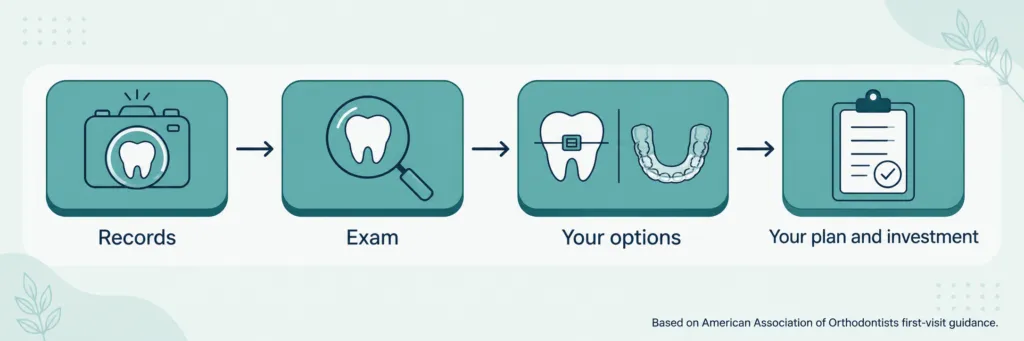
A free orthodontic consultation is a no-cost, no-obligation first visit where an orthodontist takes diagnostic records, examines your teeth and bite, and walks you through a customized treatment plan. You leave knowing what’s going on with your smile, what your options are, and roughly what treatment would involve, with nothing owed and no commitment to begin. At Wendling Orthodontics, we’ve cared for families in Flint and Grand Blanc for more than 27 years, and our consultation is genuinely free. It includes the full workup: photos, a digital panoramic x-ray, often a 3D scan, and unhurried time with the doctor who would actually treat you.
If you’ve been putting off that first appointment because you’re not sure what happens, or you’re worried about pressure, this walkthrough covers the whole visit, stage by stage. The short version is that the visit is there to answer your questions and help you decide, with no pressure either way.
Do You Need a Referral to See an Orthodontist?
You usually don’t need a dentist referral to book an orthodontic consultation. The American Association of Orthodontists says parents can schedule directly and shouldn’t wait for a referral if they have concerns about a child’s teeth or bite. The same is true for adults booking for themselves.
To set up your visit, you can call our Flint office at 810-733-3410, call our Grand Blanc office at 810-214-3711, or use the contact form on our website. When you book, we’ll point you to our new patient forms, which you can complete online or print and fill out ahead of time, so your paperwork is ready when you arrive. You can find more of the practical details on our new patient page.
What to Bring to Your First Appointment
A first visit runs smoothly with a few things in hand:
- Your dental insurance card or plan information, if you have coverage.
- A short list of questions or concerns you want addressed.
- Any recent x-rays or records from your family dentist, if you have them handy.
- For a child’s visit, a parent or guardian who can talk through options and timing.
What’s Included, and Is It Really Free?
At a complimentary consultation, “free” should mean the evaluation itself is free. It’s still smart to ask any office what records are included, because that part isn’t standardized across the profession. The AAO confirms that many orthodontists offer these check-ups at no cost and with no obligation, and if an office does charge, it’s worth asking whether imaging is part of the fee.
At our practice, the free consultation gives you the full picture. Here’s what we typically gather:
- Photos of your smile and facial structure, which help with planning and with tracking progress later.
- A digital panoramic x-ray, which gives a broad view of the teeth, jaws, and surrounding bone so nothing important is missed.
- A 3D iTero intraoral scan in many cases, which we cover in more detail below.
That combination is what lets the doctor build a real treatment plan during the same visit rather than sending you home with a vague estimate.
What the iTero 3D Scan Is Like
A digital intraoral scan uses a handheld wand to capture a 3D image of your teeth and gums, then turns that image into a digital impression. In plain terms, it replaces the old putty trays that many people remember gagging through. According to iTero, the scanner’s manufacturer, a full-mouth scan can be completed in under a minute on current systems.
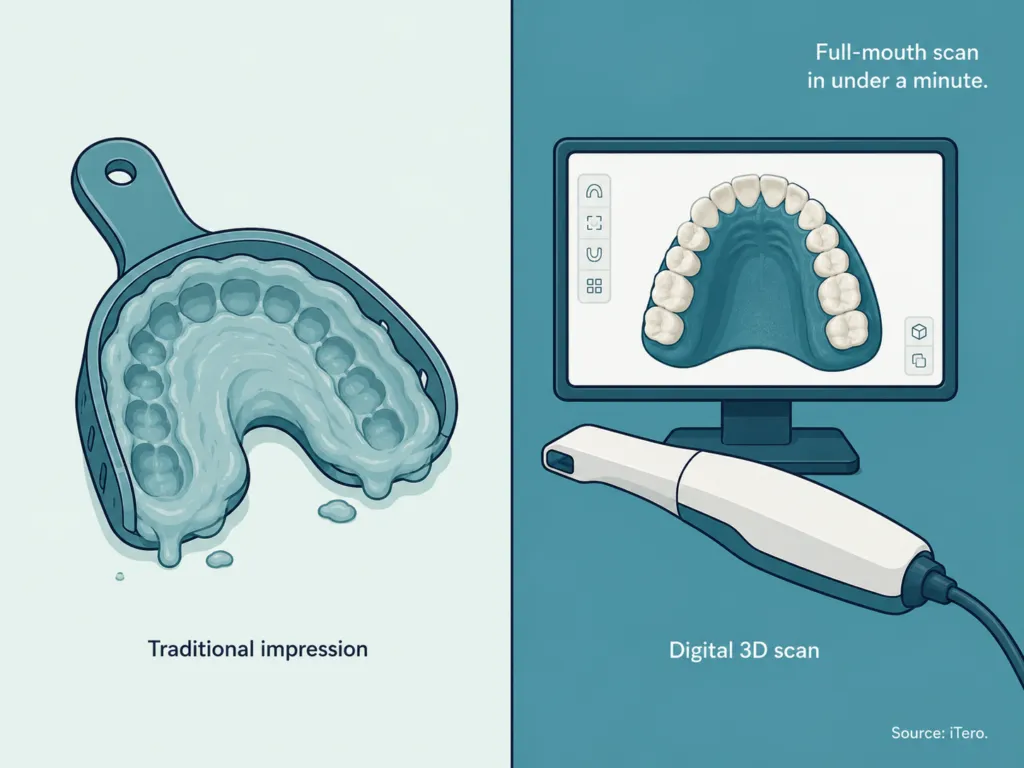
The digital approach also holds up clinically. A 2024 umbrella review found that intraoral scanners consistently improved patient comfort and reduced chairside time while staying accurate enough for orthodontic planning. Traditional impressions still work and are still used in some offices, but for most patients the scan is faster and easier.
The Exam: What the Orthodontist Checks
Once your records are ready, the exam is where the visit becomes personal. At our offices, Dr. Wendling, Dr. Perry, or Dr. Nolan Wendling personally evaluates every new patient. The doctor who sees you at this visit is the one who would guide your care.
During the exam, the doctor reviews how your teeth fit together and looks for the specific conditions that orthodontics addresses, such as crowding, spacing, crossbites, a narrow upper jaw, or a bite that doesn’t line up the way it should. For children, this is also when the doctor checks how jaw growth and the mix of baby and permanent teeth are developing. The AAO frames the first visit as answering a handful of practical questions: whether there’s an orthodontic problem, what the options are, whether any teeth might need to be removed, how long treatment could take, and what it would involve financially.
All three of our doctors were inducted into Omicron Kappa Upsilon, the national dental honor society, and that depth of training is what allows a thorough read of your situation in a single visit. The exam itself should be comfortable, with no drilling and no procedures.
Reviewing Your Treatment Options: Braces or Clear Aligners
After the exam, the doctor explains what they found and lays out the ways to address it. For most patients that means a conversation about traditional braces and clear aligner therapy. We start by asking what you’d prefer. For certain orthodontic problems, one approach will give a faster or better result, and we’ll tell you plainly when that’s the case. When both options are viable, we take the time to walk through the daily trade-offs of each.
We’ve been an Invisalign provider since 2000 and are one of the area’s Top Providers, so we’ve been working with clear aligner therapy for over two decades. That experience matters most when the choice is genuinely open, because we can describe what living with each option actually feels like day to day.
This part of the conversation gets extra attention with teenagers. Clear aligners only work when they’re worn 20 to 22 hours a day, and we want a teen and their parents to understand that responsibility before committing, so the choice holds up over what can be a two-year treatment. Taking that time upfront is how we help families avoid second-guessing a decision later.
Talking About Investment, Insurance, and Payment
The last part of the visit is the money conversation, and it should be clear and honest. We don’t publish a single price for treatment because the number depends on your situation. What you invest is shaped by the type of treatment, the complexity of your case, how long treatment takes, and your insurance. For that reason, exact pricing is something we provide at your consultation, once we’ve actually looked at your teeth.
For general context, national consumer research puts typical metal braces in the range of about $3,000 to $7,000 and clear aligners in a similar band, depending on the case and the region. Those figures are rough planning numbers rather than a quote, and your own plan may land above or below them.
A few things tend to bring the number down:
- Insurance. We work with most insurance companies, including plans like Delta Dental, Blue Cross, Cigna, Aetna, and Principal, and we help verify your benefits and file claims. Orthodontic coverage is usually a percentage benefit with a separate lifetime maximum, often somewhere around 25% to 50% coverage capped near $1,000 to $3,000, so it commonly helps without covering the entire fee.
- Payment plans. We offer flexible, interest-free payment plans, low down payments, and auto-draft options. Spreading treatment over monthly payments is standard in orthodontics, and the AAO notes most orthodontists offer this kind of financing.
- Pre-tax dollars. Orthodontic care is a qualified dental expense under IRS Publication 502, so many families use HSA or FSA funds to lower out-of-pocket spending.
For Flint-area families on Medicaid, Michigan’s Healthy Kids Dental program provides no-cost dental coverage for children under 21, and it’s worth asking your plan directly about orthodontic benefits. You can see more of how we handle affordability on our financing page.
Who Should Come In, and When
You don’t have to be a teenager to benefit from a consultation. Two groups tend to wonder whether the timing is right for them.
Children. The AAO recommends that every child have a first orthodontic check-up no later than age 7. At that age, the goal is rarely to begin treatment right away. A 7-year-old has a mix of baby and permanent teeth, which lets the doctor spot developing bite and jaw issues early and decide whether to act now or simply monitor growth. If your child is younger or older than that, an evaluation still makes sense whenever you have a concern. You can read more about timing on our early orthodontic treatment page.
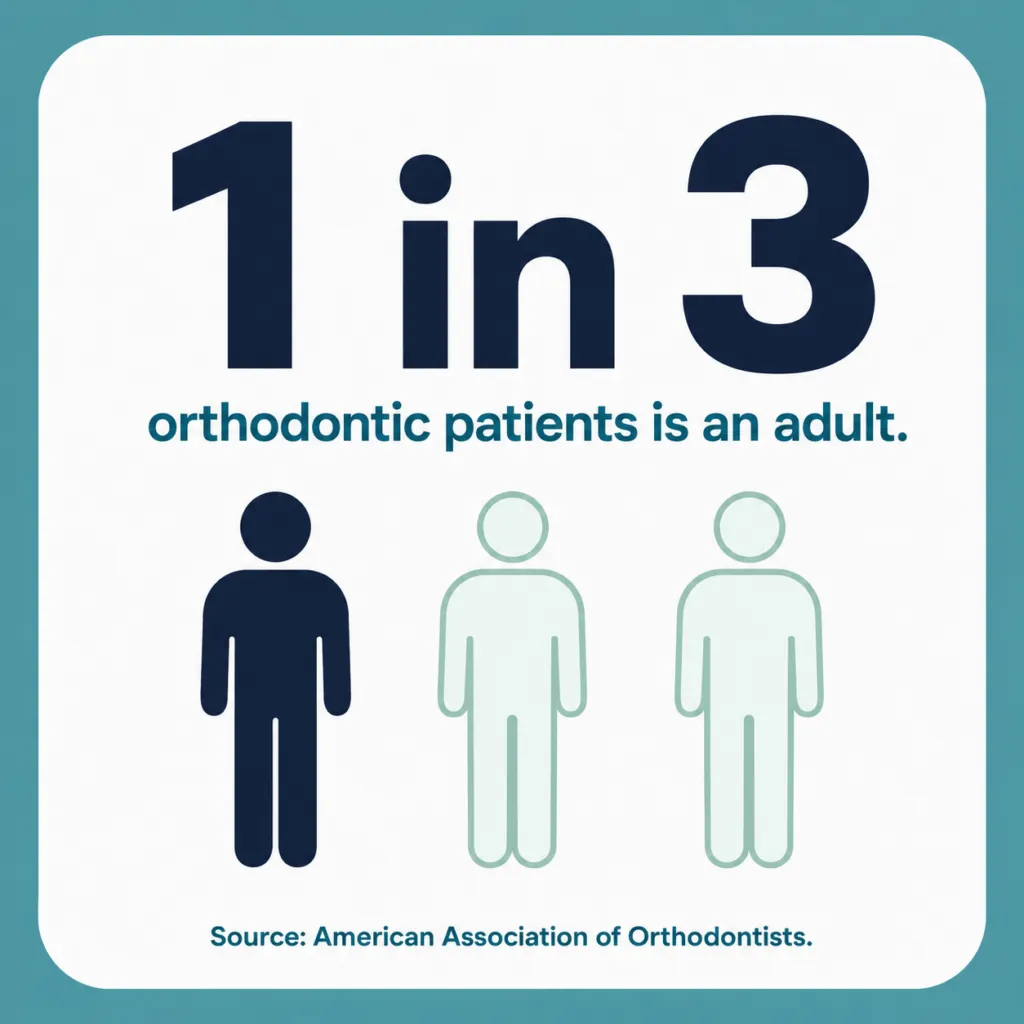
Adults. It’s not too late. The AAO reports that one in three orthodontic patients is now an adult, and age is rarely a deciding factor in whether treatment will work. Healthy teeth can be moved at any age, though adult treatment sometimes takes a little longer because adult bone is denser. About a quarter of our own patients are adults. If you’ve been thinking about it for years, a free consultation is a low-stakes way to find out what’s possible. Our adult orthodontics page has more on this.
Frequently Asked Questions
How long does a free orthodontic consultation take?
A first consultation often runs about 30 to 60 minutes, since it includes paperwork, records, the exam, and a treatment discussion. We’d rather take the time to answer your questions than rush you through.
Do I have to start treatment the day of my consultation?
No. The visit is informational and diagnostic. Many patients review the plan at home, compare options, or think it over before deciding, and there’s no obligation to begin that day.
Can I book a consultation without seeing my regular dentist first?
Yes. You don’t need a dentist referral to book with an orthodontist, and you can schedule directly with either of our offices.
Will the appointment hurt?
No. The first visit involves photos, an x-ray, a scan, and an exam. There’s no drilling and no procedure, so it should be comfortable for both children and adults.
Ready to Book Your Free Consultation?
If you’re anywhere in the Flint or Grand Blanc area and have been wondering what a straighter smile would take, we’d be glad to show you. Your first visit is free, there’s no pressure to commit, and you’ll leave with a clear picture of your options and a plan built around your situation. You can reach our Flint office at 810-733-3410, our Grand Blanc office at 810-214-3711, or request your free consultation online. We look forward to meeting you.